
How to Search Rockland County Court Records
There is no single search that covers every Rockland court. Use the system that matches the case. The County Clerk eSearch portal, run on Cott Systems, holds many filed and recorded documents. That includes court records, land records, maps, naturalization, notary, tax warrants, and judgments. Some records reach back to 1798. For statewide case data, New York runs separate web tools. WebCivil Supreme handles civil Supreme Court cases. WebCriminal covers criminal cases and calendars. WebSurrogate covers estate files. WebFamily lists Family Court calendars, but those records stay limited.
Before you start, know two things: the court type and a name or number. A party name works in most tools. An index number, case number, or file number narrows things fast. The state's eCourts hub links each database in one place.
The official NY Courts eCourts page gathers WebCivil, WebCriminal, WebFamily, WebSurrogate, eTrack, and NYSCEF together.
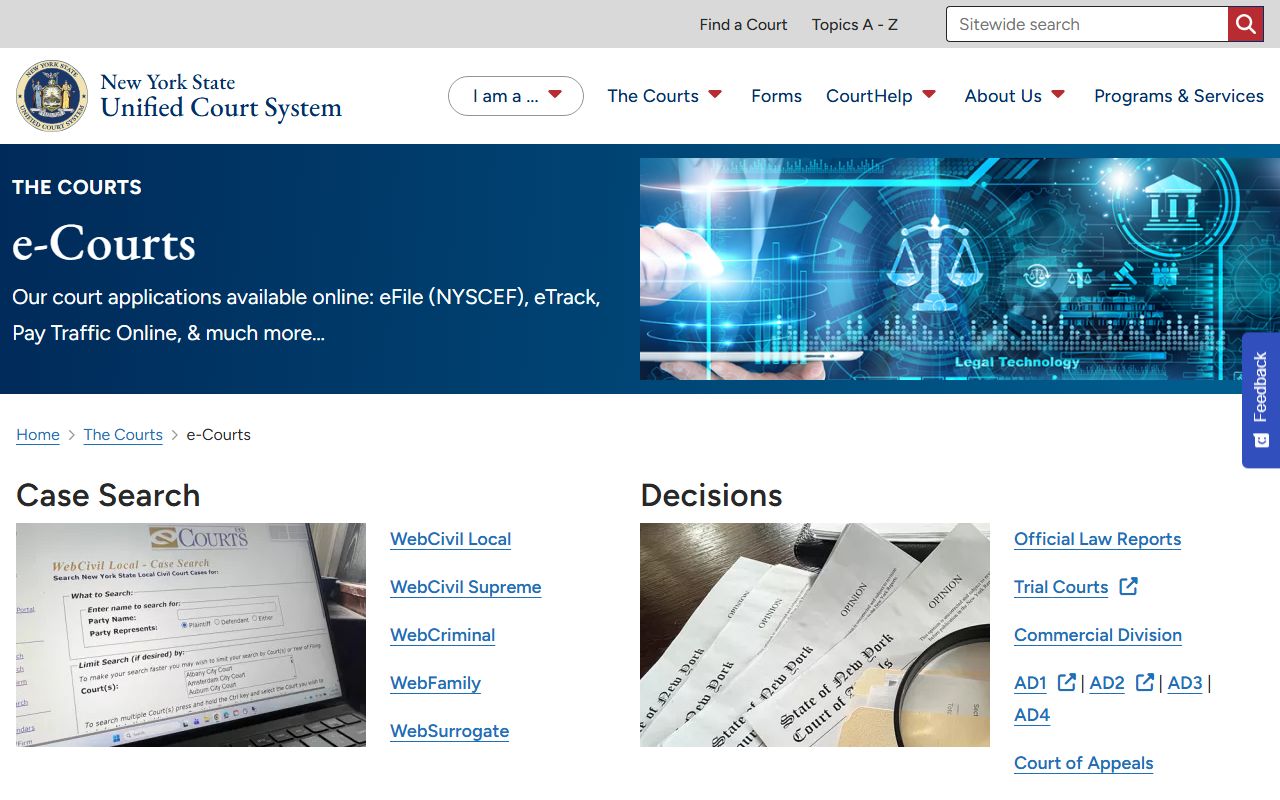
From that hub, pick the tool that fits your Rockland County court records search, then enter your name or number. The steps below walk through a typical search.
- Decide the court type: Supreme, County, Family, Surrogate's, or a town or village justice court.
- Open the matching portal from the eCourts page or the County Clerk eSearch site.
- Enter a party name, index number, case number, or summons number.
- Filter by court and year, then run the search and review the results.
- Cross-reference court records with NYSCEF, and request a certified copy if you need one for legal use.
Note: the County Clerk's portal warns users to cross-check court records against NYSCEF and to contact the office if the two do not match.
The Rockland County Judicial System
Rockland sits in the Ninth Judicial District of the New York State Unified Court System. That district also covers Dutchess, Orange, Putnam, and Westchester. New York uses court names that can confuse people. The Supreme Court is not the top court here. It is the main trial court for civil actions. Outside New York City, the County Court handles felony criminal cases and appeals from local courts. Family Court and Surrogate's Court are separate county-level courts. The state's highest court is the Court of Appeals.
A case moves through levels based on its subject. Big civil suits start in Supreme Court. Felonies route to County Court after arraignment and indictment. Estates go to Surrogate's Court. Small claims under $3,000 and all landlord-tenant disputes are handled by towns and villages, not the County Clerk.
Case flow: Town or Village Justice Court › County Court › Supreme Court › Appellate Division › Court of Appeals
| Court | Jurisdiction | Case Types |
|---|---|---|
| Supreme Court | General civil, statewide | Large civil suits, divorce, special proceedings |
| County Court | County-level criminal | Felonies, some civil, local appeals |
| Family Court | Family matters | Custody, support, paternity, juvenile, neglect |
| Surrogate's Court | Estates and wills | Probate, administration, guardianship |
| Justice Courts | Town and village | Small claims, landlord-tenant, traffic, violations |
Rockland has five town justice courts and more than a dozen village courts. They handle the local cases that never reach the County Clerk's filing system.
Rockland County Courthouse in New City
Most Rockland courts share one campus at 1 South Main Street in New City. The building holds the Supreme and County Court, Family Court, Surrogate's Court, the County Clerk, and the District Attorney. The court guide places it in the Rockland County Government Center, about one mile from Exit 11 on the Palisades Interstate Parkway and two blocks from Route 304. Visitors must pass through a magnetometer before entering court space.
Court offices keep regular hours of 9:00 a.m. to 5:00 p.m., Monday through Friday, except on state holidays. The County Clerk opens earlier, at 7:00 a.m. on weekdays.
Types of Court Records Available in Rockland County
Rockland court records fall into a few broad groups. Each group sits with a different court and a different search tool. Civil and criminal records tend to be public. Family, matrimonial, and youthful offender files are not. The County Clerk holds the filed papers for Supreme and County Court actions, while the state web systems carry case-index and calendar data.
Here are the main record types you can look up in Rockland County:
- Civil Supreme Court records - summonses, complaints, motions, orders, and judgments, filed with the County Clerk.
- County Court criminal records - felony indictments, plea and sentencing entries, and certificates of disposition.
- Family Court records - custody, support, and paternity files, with access limited to parties and attorneys.
- Surrogate's Court records - wills, probate petitions, and estate administration papers.
- Traffic and local court records - tickets and violations handled by town and village justice courts.
What Rockland County Court Records Show
A court record is built from fields. The exact set depends on the court and the case. A civil Supreme Court file uses an index number. A criminal file uses a case number or summons number. A Surrogate's file uses a file number. Most public results show parties, filing dates, the assigned judge, case status, and a list of docket entries. Sealed and confidential material is held back. The table lists the fields you are most likely to see.
| Field | What It Shows |
|---|---|
| Case / Index Number | The filing number assigned when the action started |
| Filing Date | Year and date the case was opened |
| Parties | Plaintiff or petitioner and defendant or respondent |
| Charges / Cause | The crime charged or the civil claim raised |
| Disposition | The outcome, such as dismissed, settled, or convicted |
| Judge / Part | The justice or judge and courtroom assignment |
WebCivil lets you search by index number, party, attorney, or justice. The screen below shows the index search, one of the most direct ways into a Rockland civil case.
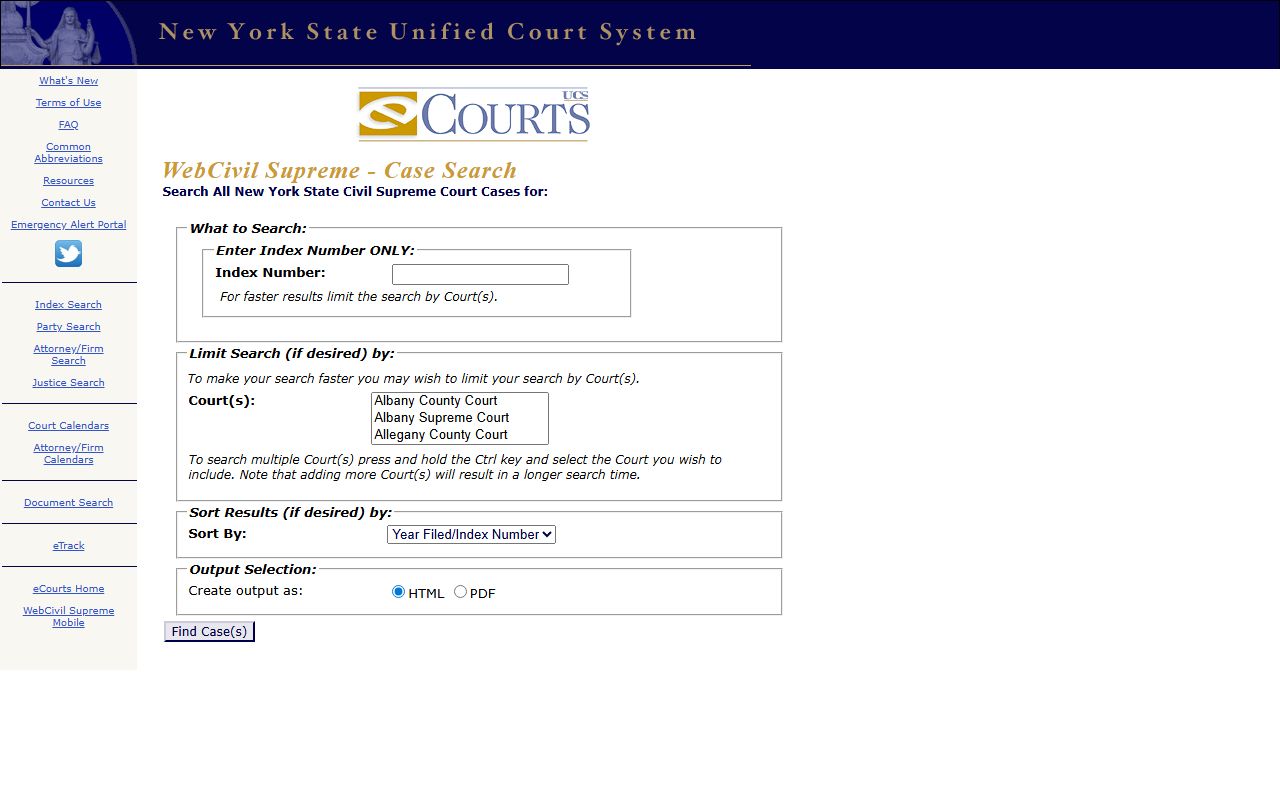
You can read more field details on the Rockland County court records page, which breaks down every search system.
| Search Field | Type | Notes |
|---|---|---|
| Index Number | Text | Enter the index number only |
| Name | Text | Party search by full name |
| Court(s) | Multi-select | Includes Rockland County and Supreme Court |
| Year of Filing | Dropdown | 2026 back through 1983 on the inspected screen |
| Case Status | Radio | Open, active, restored, or all |
Public Access Laws for Rockland County Court Records
New York splits access into two tracks. Agency records fall under the Freedom of Information Law, or FOIL. Court case records follow court rules and sealing statutes instead. FOIL covers the administrative records of agencies and the court system, but not every case file in the same way. For Rockland agency records, you file a county FOIL request. For case files, you use the court portals and the County Clerk. The Clerk makes many Supreme and County Court documents viewable online or in person, but holds back mental hygiene, matrimonial, and youthful offender files.
Key Statutes:
Public Officers Law §§ 84-90 - the Freedom of Information Law, setting New York's policy of open access to government records.
22 NYCRR Part 216 (Rule 216.1) - bars sealing a civil court record without written good-cause findings.
Criminal Procedure Law § 160.59 - lets some people seal old convictions after ten crime-free years.
FOIL denials can be appealed to the agency's appeal officer, then challenged in court under Article 78. Fees usually cover copying or actual cost.
Records That Are Restricted or Confidential
Not every Rockland court record is open. The County Clerk says the public may view court documents other than mental hygiene, matrimonial, and youthful offender files. Matrimonial files can be viewed only by parties to the action and their attorneys. Family Court adds more limits. Juvenile delinquency, abuse and neglect, and adoption records are restricted by statute. Sealed criminal records under CPL 160.50, 160.55, and 160.59 stay out of public searches.
To view a sealed or restricted file, you usually need legal standing or a court order. New York mostly uses sealing, not broad expungement, so even sealed convictions may still be seen by some law enforcement and licensing agencies.
Specialty Courts in Rockland County
Rockland runs treatment-focused programs that work alongside the regular courts. The Rockland County Drug Court launched around 1998 and marked its tenth anniversary in 2008. It started in Clarkstown. It diverts people charged with nonviolent misdemeanors and felonies who have drug or alcohol problems into supervised treatment instead of jail. A Drug Court Team manages each case.
The District Attorney also runs a Veteran's Alternative to Incarceration program, known as VATI. It screens returning service members who face nonviolent charges and links them to veteran-specific substance abuse and mental health treatment. Both programs aim to cut repeat offenses and steer people toward help. The DA lists several more diversion programs, including mental health and developmental-disability tracks.
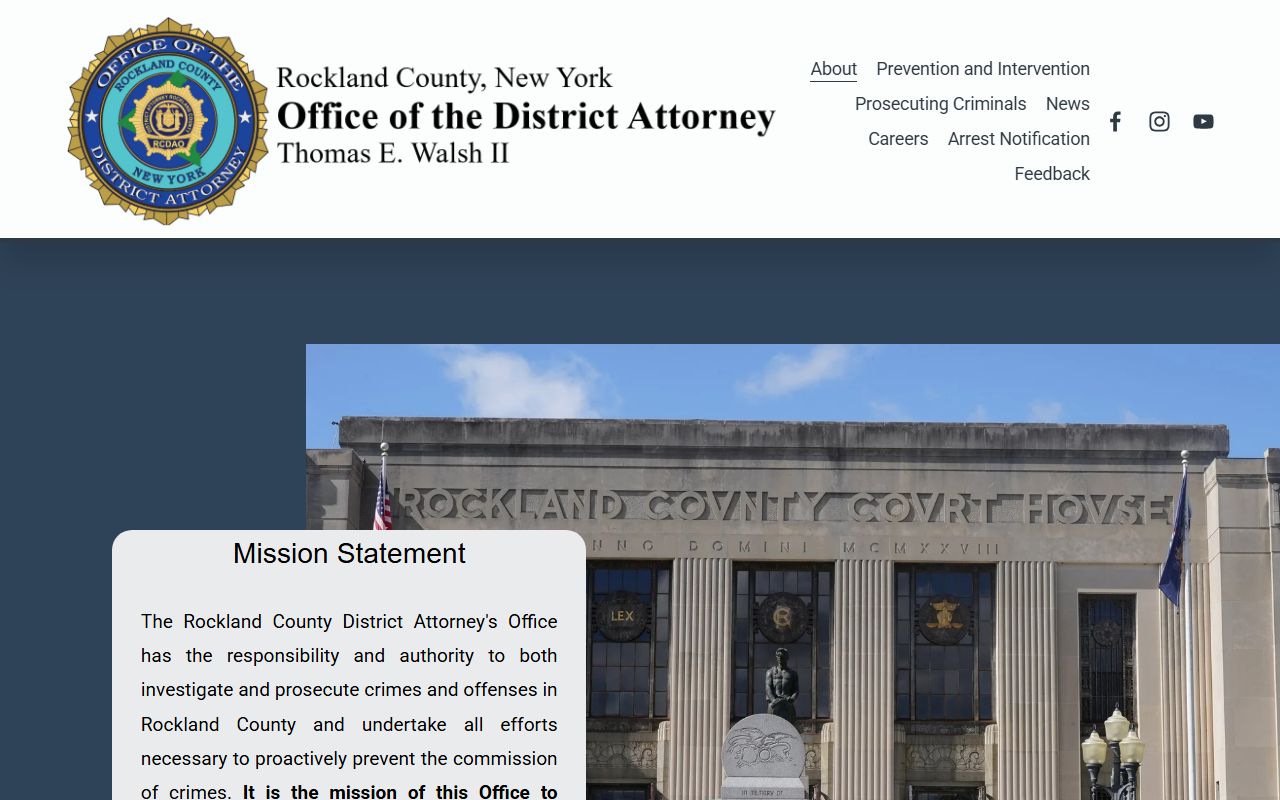
The DA's About page describes Drug Court, VATI, and the Youth and Police Initiative in more detail.
Rockland County Sheriff and Jail
The Rockland County Sheriff's Office runs the county Correctional Center. The office sits at 55 New Hempstead Road in New City. Its main line is 845-638-5400, and the jail information line is 845-638-5600. The facility holds men and women over age 16 who are awaiting trial or serving a sentence of one year or less. It also takes parole and probation violators and state-ready people.
The Sheriff's site points the public to its mobile app and the jail phone line for custody status, rather than a web roster. For full details on finding someone in custody, see the Rockland County inmate records page, or check warrant records if you think a case has an open warrant.
Marriage, Divorce, and Surrogate's Court
Marriage licenses in New York come from a town or city clerk, not the County Clerk's court unit. Divorce cases are Supreme Court matters, but the files are restricted. Only parties and their attorneys can view matrimonial records. Estates run through Surrogate's Court, the New York name for what other states call probate court. See the marriage and divorce records page and the Surrogate's Court page for the full process.
- Testator
- A person who makes a will.
- Executor
- The person named in a will to settle the estate.
- Letters testamentary
- The court order giving an executor legal power to act.
Rockland County Court Records Fees
Viewing records online is free at the County Clerk eSearch site. You just sign in as a guest. Printing is different. You need a registered account to print, and prints cost money per page. Hard-copy and certified copies carry set fees at the counter. The table lists the common charges from the Clerk.
| Item | Amount |
|---|---|
| View online documents | Free (guest sign-in) |
| Print online documents | $0.50 per page |
| Hard-copy court document copy | $0.50 per copy |
| Certified copy | $1.25 per page, $5 minimum |
| Supreme Court index number | $210 |
The eSearch portal, run by Cott Systems, gives free guest viewing around the clock. A 3% convenience charge applies to credit-card account funding.
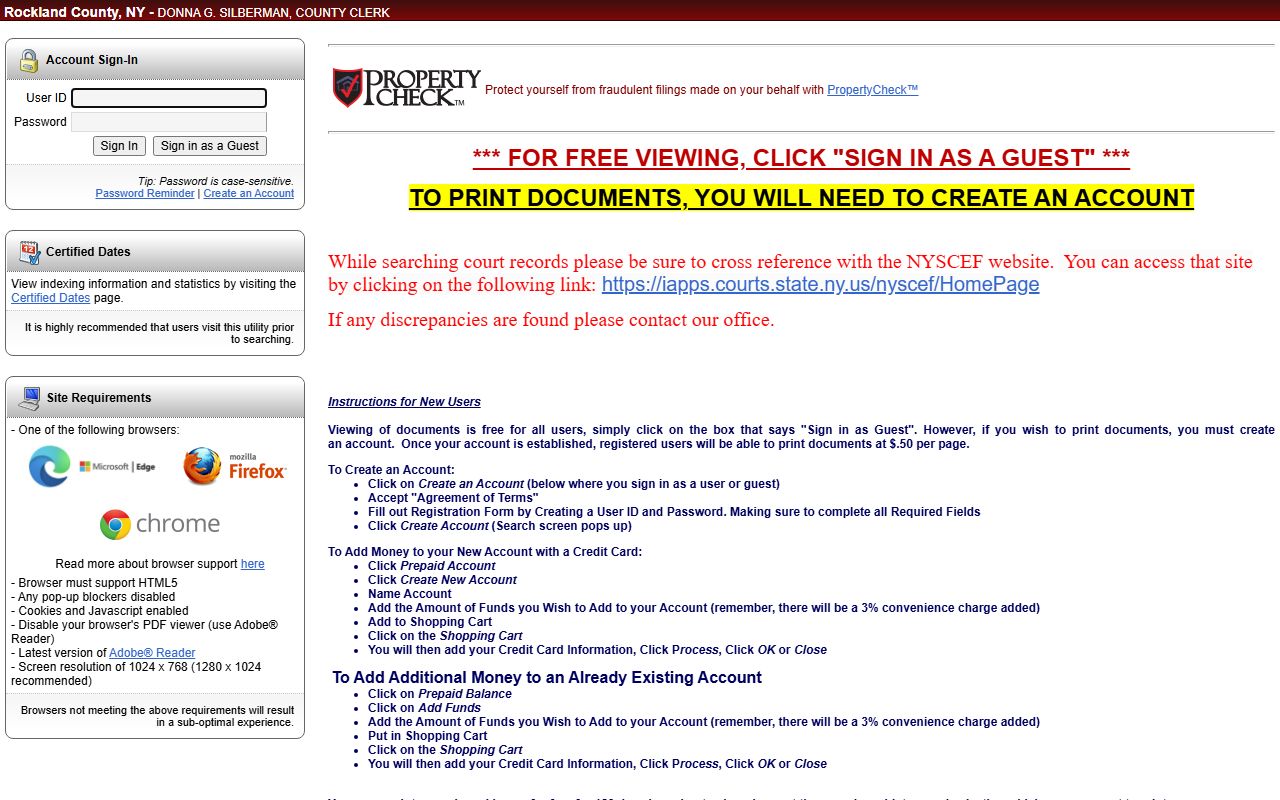
The County Clerk eSearch portal is the main gateway to recorded Rockland documents and images.
How to Interpret Rockland County Court Records
Court files use shorthand. A charge is not a conviction. An arrest record shows what police alleged. A disposition shows how the case ended. An index number marks a civil case. A case number or summons number marks a criminal one. The docket is the running list of every filing and court date. Watch case status too. "Open" means active, while a disposition entry signals the case is closed. If a result looks wrong or missing, the data may simply lag, and you should confirm with the court.
Accuracy and Record Limitations
Online court data is a snapshot, not the final word. WebCriminal itself posts a notice that some case updates run late. The County Clerk splits files by age. Cases from the last six years sit at the courthouse, and older files move to the Archives in Pomona. Always treat the online record as a lead, then confirm the detail with the office that holds the file.
Note: Before you rely on an online court record for any legal step, confirm the case details directly with the County Clerk or the court that holds the file.
History of Rockland County Courts
Rockland's court story starts before the county existed. When the area was part of Orange County, the courthouse sat in Tappan. Rockland County was formed in 1798, and the county seat moved to New City, where a new courthouse went up. Some County Clerk records date back to that same year, 1798. That long history is why files split between the courthouse and the Archives today, and why the Clerk has spent years scanning old documents into a digital system that runs around the clock.
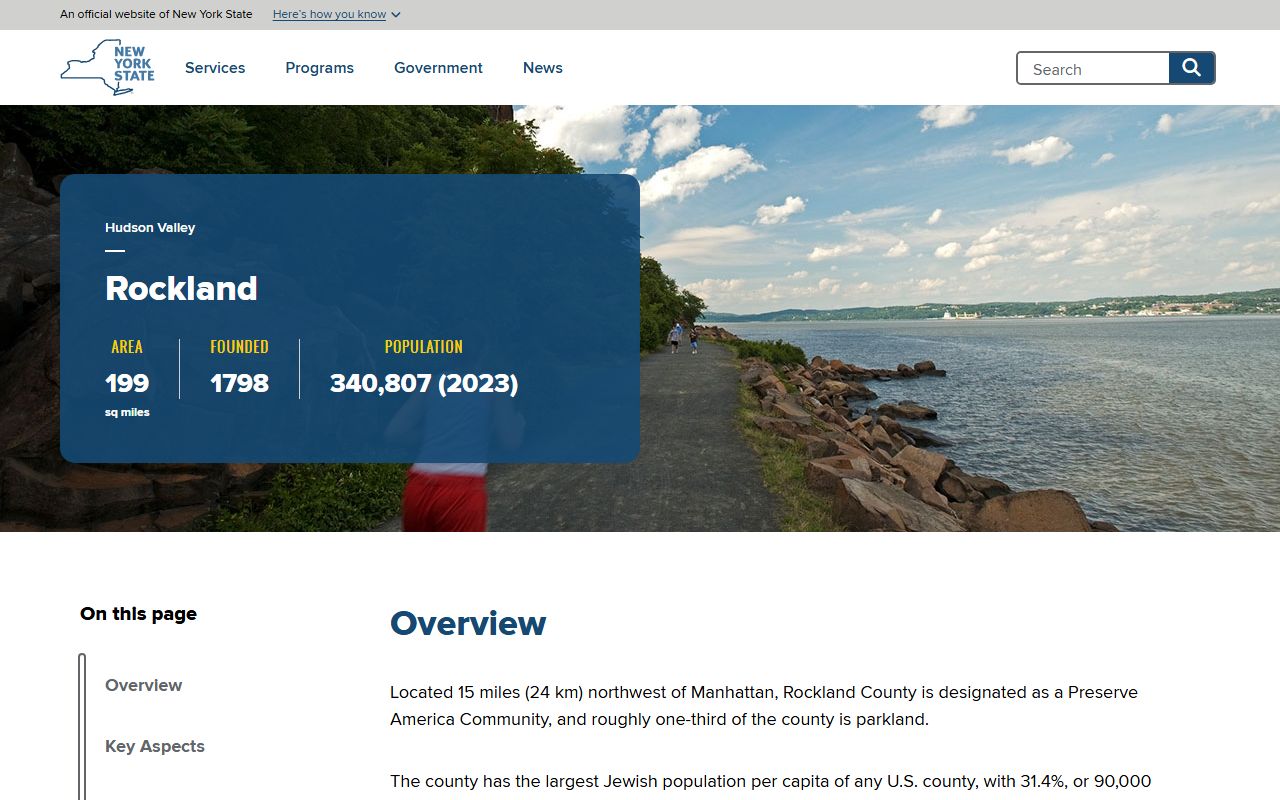
The state's NY.gov Rockland County profile gives wider context on the county and its government.
Frequently Asked Questions
How do I search Rockland County court records online?
Use the system that fits the case. County Clerk eSearch covers filed and recorded documents. WebCivil Supreme handles civil cases. WebCriminal handles criminal cases and calendars. WebSurrogate covers estates. Family records are restricted. The Clerk's portal also tells you to cross-check court records with NYSCEF.
Where is the Rockland County Courthouse?
The courthouse is at 1 South Main Street, New City, NY 10956. The Supreme and County Court, Family Court, Surrogate's Court, the County Clerk, and the District Attorney all sit on or near the campus. The County Clerk is in Suite 100, with access through the rear lot at 11 New Hempstead Road.
Are Rockland court records free to view?
Many County Clerk documents are free to view online. You just sign in as a guest. Printing needs a registered account and costs $0.50 per page. Certified copies cost $1.25 per page with a $5 minimum.
More answers are on the Rockland County court records FAQ page.